Study Circle
For some one starting, stock markets can be a daunting mountain to climb. In the information age there is no dearth of information at your finger tips. But with so much information out there it can get very confusing. Here we try to demystify the stock markets for you.
The content here is purely educational and from our perspective. The information here is not an invitation or recommendation to trade the stock market. Give sufficient thought and hard research at your end before you act upon the content here. Stock markets comes with innate set of risks and returns and this needs to be understood and appreciated.
The Basics
The what, where and when of the stock market

Financial Market Fundamentals
A structured crash course in Indian financial markets: equity, debt, forex, commodities and crypto, with mechanics, costs, regulation, investing and trading realities, and taxation.
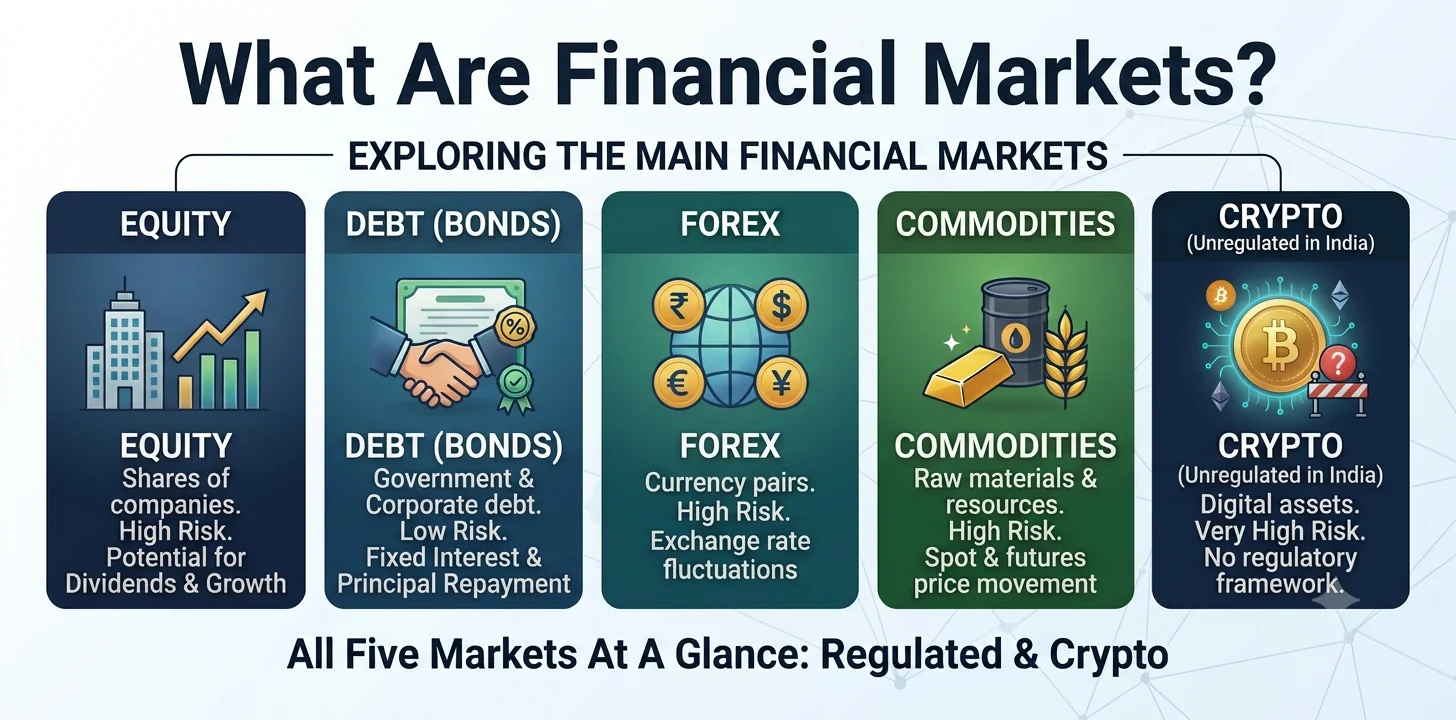
What financial markets are
The four regulated markets in India (equity, debt, forex and commodities), plus crypto, and what each one is actually trading.
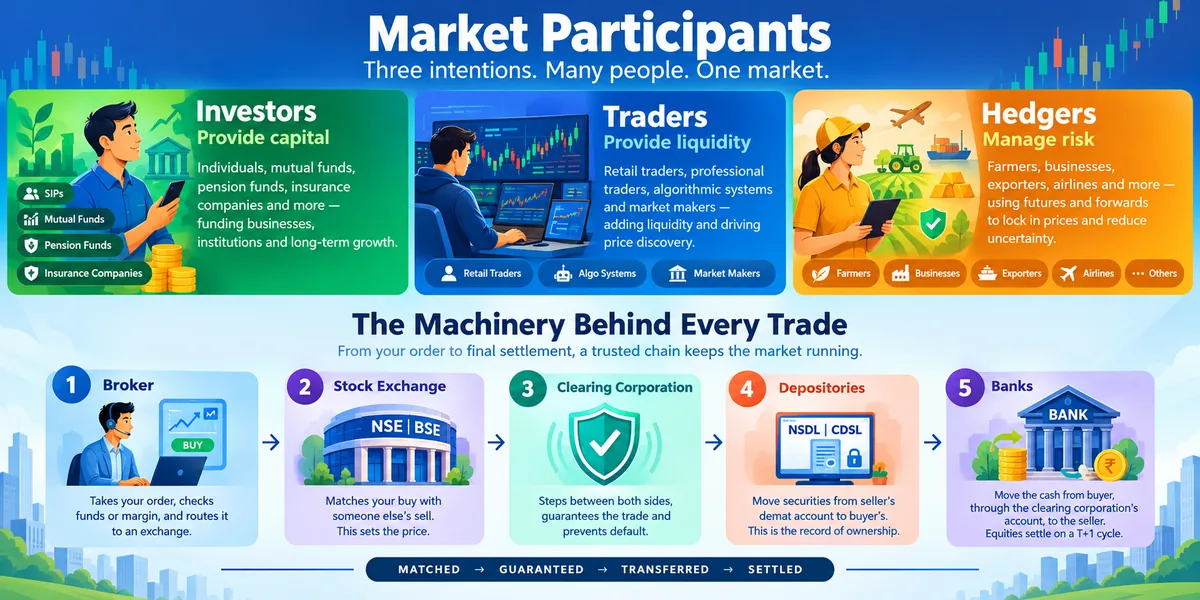
Market participants
The three intentions behind every order (investing, trading and hedging), who carries each one, and the machinery that settles what they trade.

Stock exchanges
BSE, NSE, MCX and NCDEX: the hours each one trades, what an exchange is, how price discovery works, and how the equity day actually runs, from the opening auction to settlement.

The Share Market
What a share is, primary and secondary markets, face, book and market value, market capitalisation, and how dividends, bonus issues, splits and rights issues work.
Fundamental Analysis
How to read a company's financial statements, the ratios that matter, how valuation works in outline, and the red flags that appear before a loss.
Technical Analysis
How to read a price chart: candles, trend, support and resistance, volume, moving averages and indicators, and what technical analysis honestly cannot do.
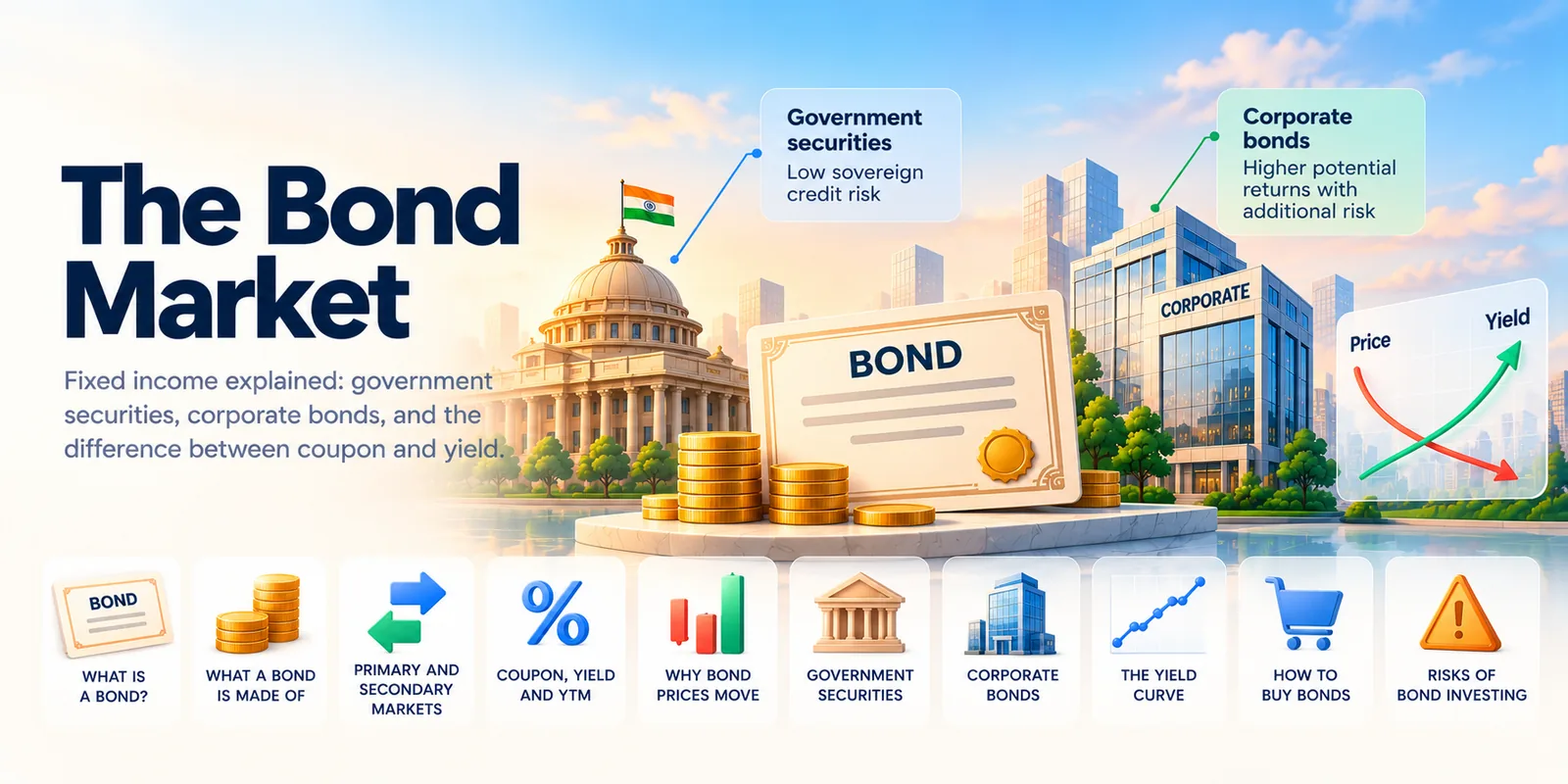
The bond market
Bonds explained: government securities, corporate bonds, how price and yield move in opposite directions, what duration measures, and how to buy them in India.

The forex market
Currency pairs, spot, forwards, futures and options, the permitted channels under FEMA and RBI rules, and how to spot an unauthorised forex platform.

The commodities market
Commodity futures and options, trading hours by category, contract sizes, margins, physical delivery, and the risks of option devolvement in India.

The crypto market
Learn crypto trading in India: Bitcoin, Ethereum, spot, futures, options, exchanges, taxation, FIU rules and investor risks.

Derivatives
Understand what derivatives are, why they exist, how futures and options differ, and the risks of leverage.

Futures
Understand long and short futures, contract sizes, profits and losses, daily settlement, rollover and expiry in India.

Options
Options explained: calls, puts, moneyness, premium, time decay, implied volatility, Black-Scholes, the Greeks, exercise, settlement and the risks of buying and writing.
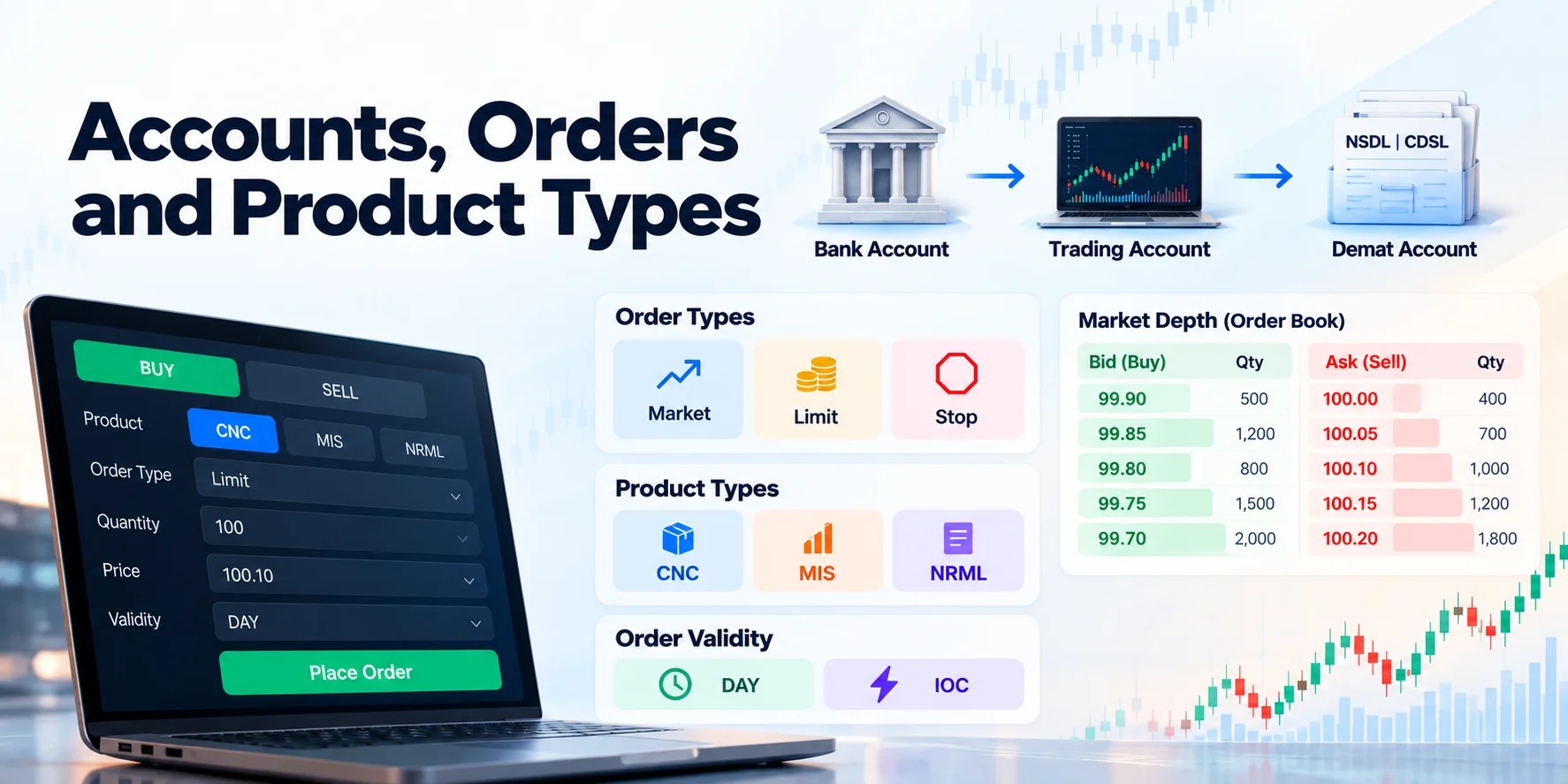
Accounts, Orders and Product Types
Understand trading and demat accounts, CNC, MIS, NRML, market and limit orders, stop-losses, order validity and market depth.
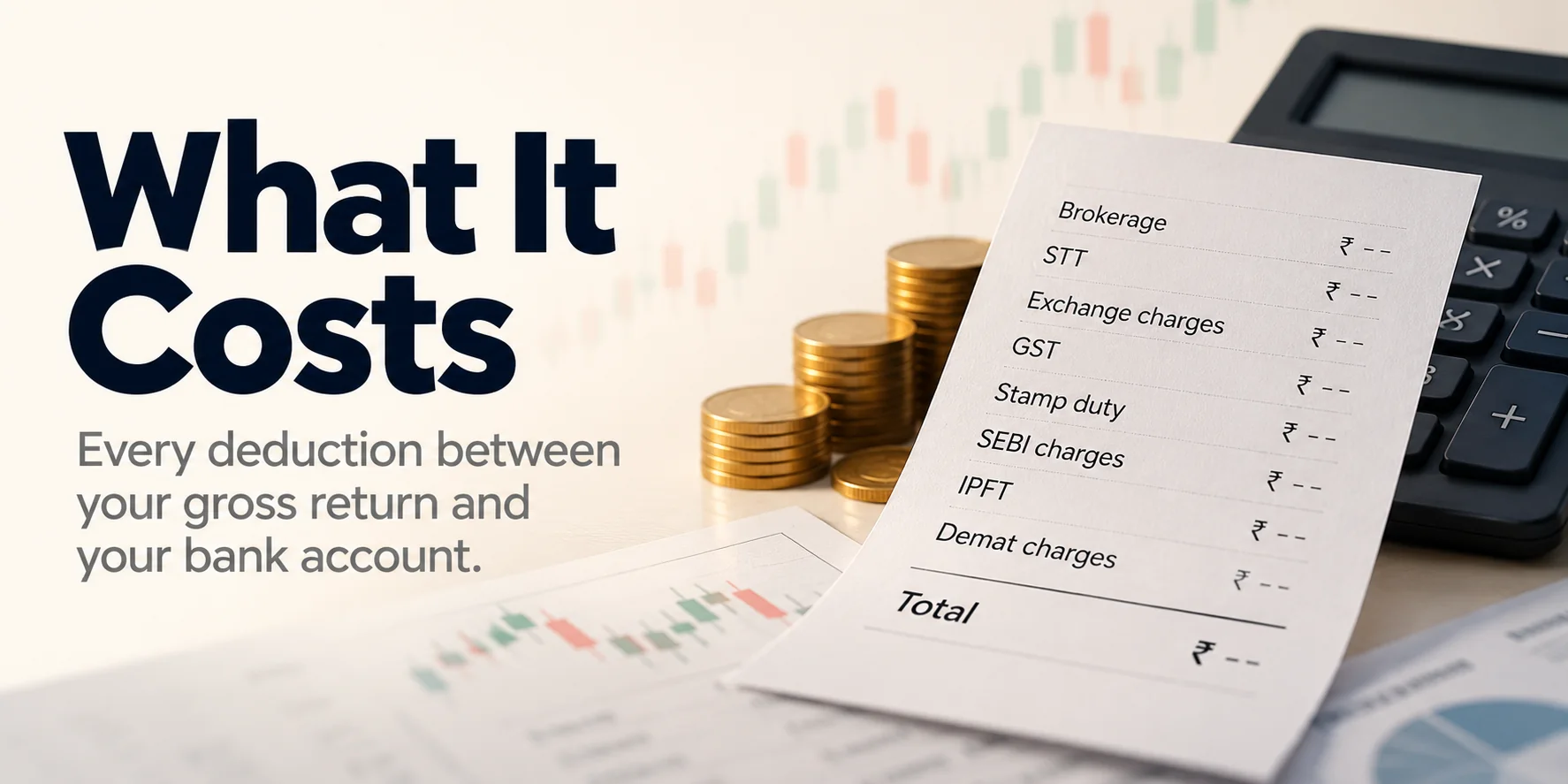
What It Costs
Understand brokerage, STT, CTT, GST, exchange charges, stamp duty, demat fees and the real cost of every trade.

SEBI and investor protection
What SEBI regulates and what it does not, how to verify a broker or adviser, the Investor Protection Fund, and the grievance clock with deadlines.
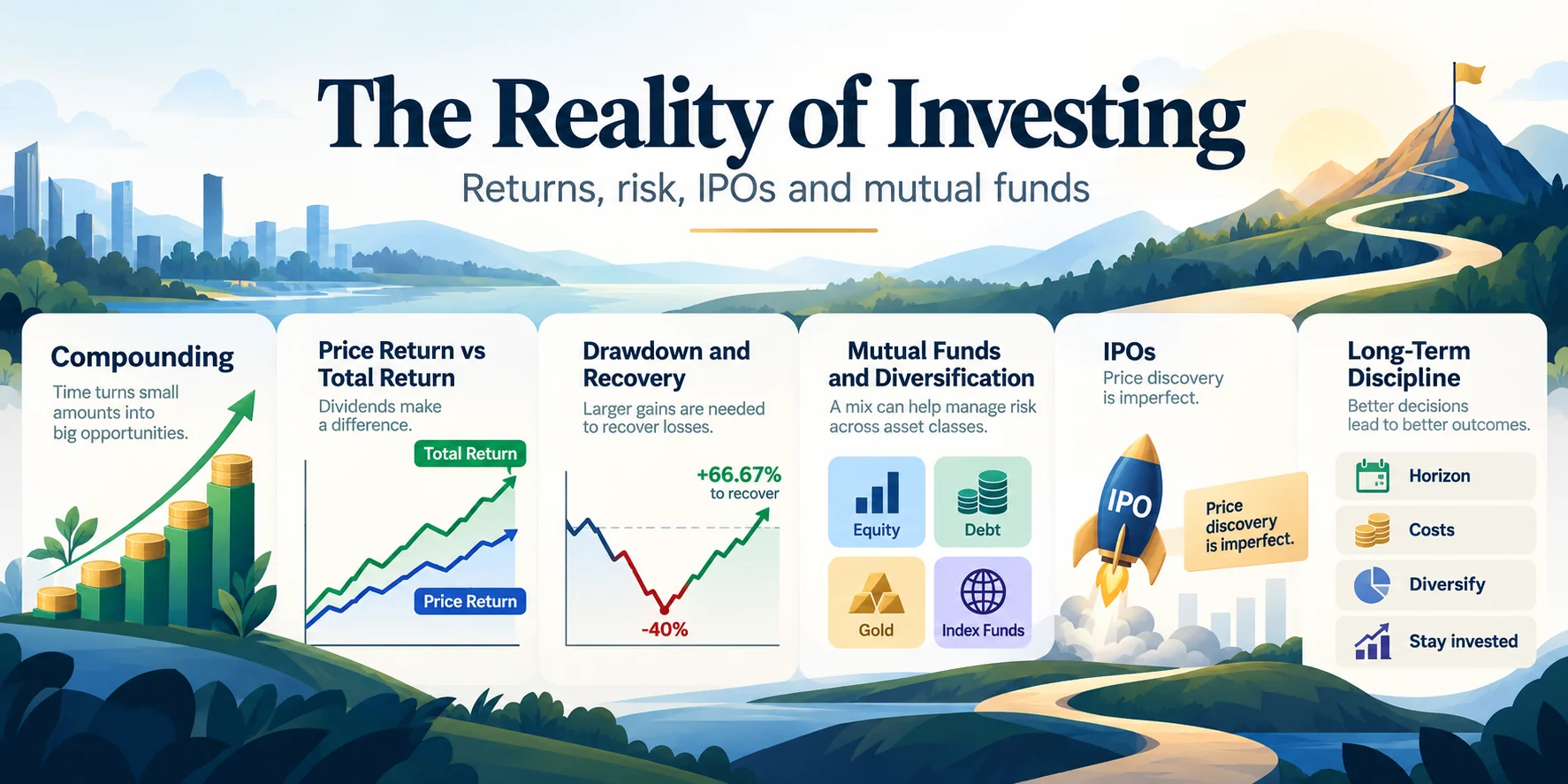
The reality of investing
What historical returns really tell us, how risk affects compounding, whether IPOs are worth considering, and how mutual funds fit into long-term investing.

The reality of trading
What SEBI's research reveals about retail trading losses, why transaction costs matter, and what a mechanical trading system can and cannot control.

Taxation
How Indian tax treats investing and trading: the two Acts, how income combines across heads, capital-gains rates, set-off, audit and filing.
Mutual Funds, ETFs and SIPs
How pooled funds work, the difference between active funds, index funds and ETFs, what a SIP does and does not do, and the costs that decide the outcome.
Risk Management and Position Sizing
How much to risk on a trade, how to size a position from the entry and the stop, why drawdowns are harder to recover than they look, and how leverage changes the maths.
Algorithmic Trading Approaches
The main families of automated strategy, what each one needs to work, how execution and costs decide the result, and why a backtest is not a promise.
Stock Broker
The market middlemen we have to walk with

12 broker reviews
A comparison table, the charges to check and who each platform suits.
Open the comparisonStrategy
Successful traders have a workable trading strategy

Beware of Option Selling
OTM option selling is sold as easy weekly income. Why the accuracy looks deceptively high, and how a single black swan day can erase months of small profits.
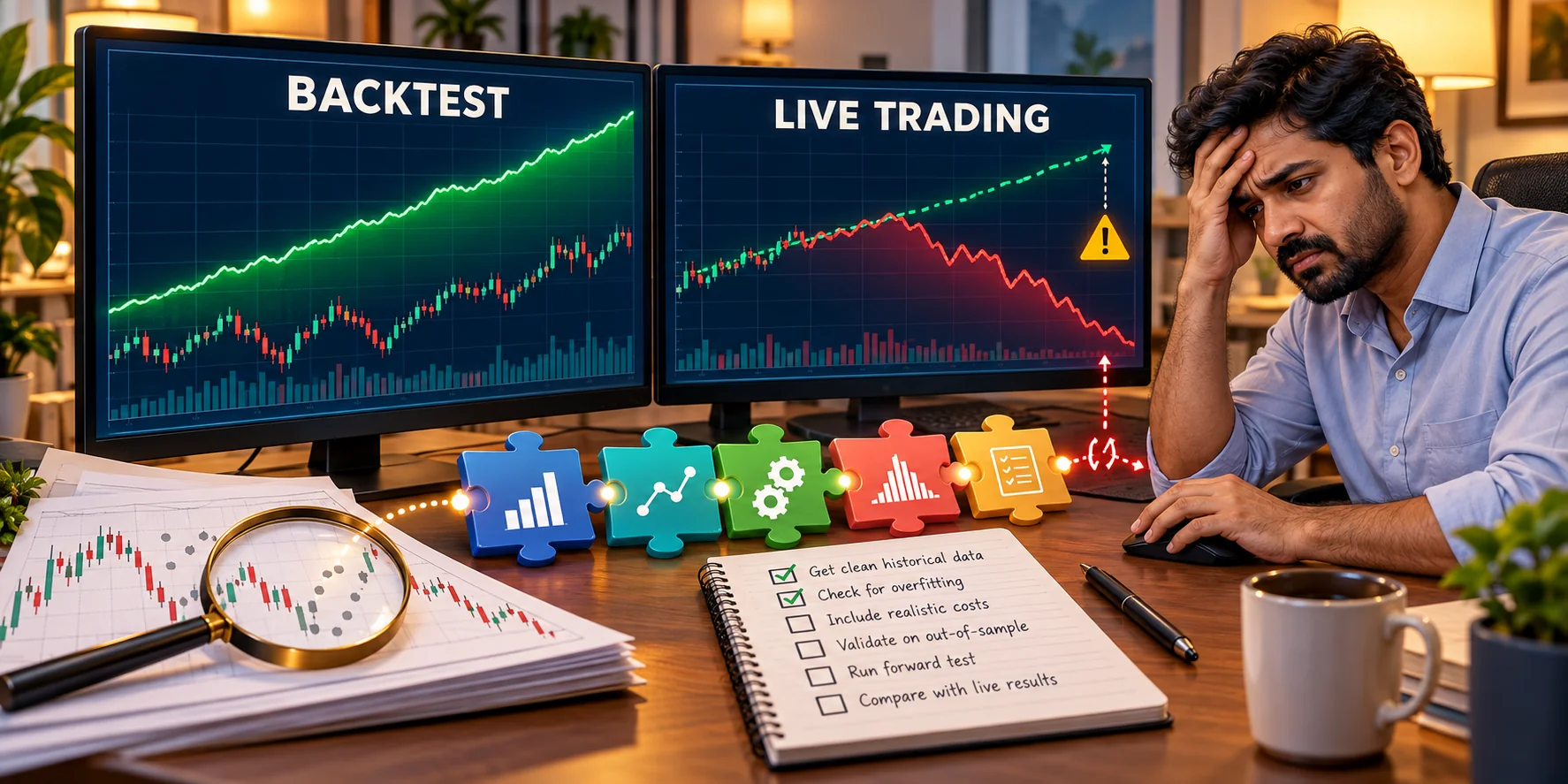
Connecting the Dots With a Backtester
A backtester can flatter a strategy that then fails in live trading. Six checks, from data quality to curve fitting, that decide whether a result is worth trusting.

Mechanical Trading System
Professionals trade a plan; novices improvise and pay for it. The questions a trading plan has to answer before you risk real money in the market.

Naked Option Buying Works
Naked option buying is usually dismissed out of hand. The case for it: capped risk, no margin, and how time decay and delta behave over a run of trades.
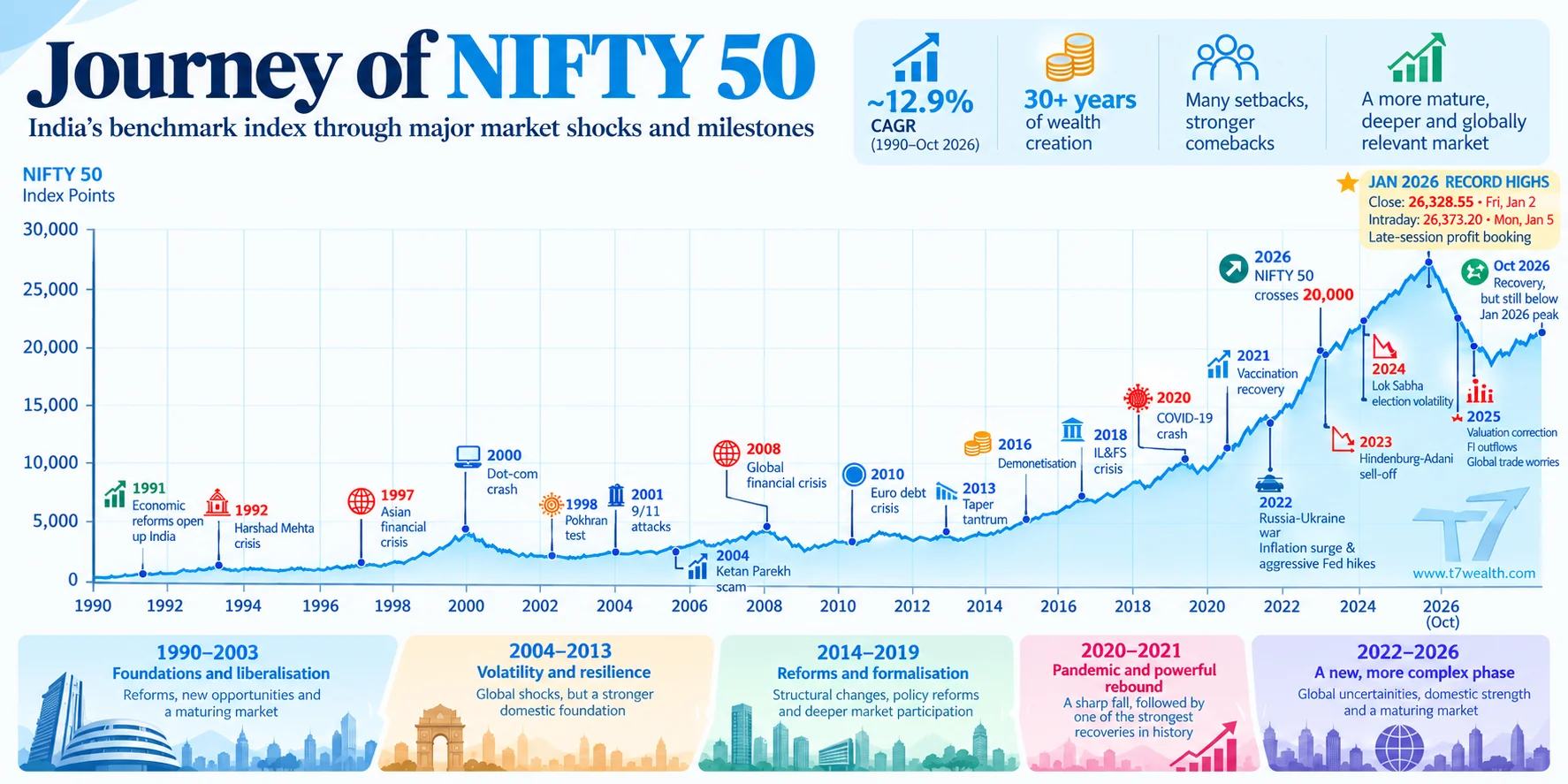
Trend Following the Nifty Index
Why Nifty suits trend following in India: markets trend for part of the time, Nifty is liquid and hard for one player to move, and events punctuate a long uptrend.
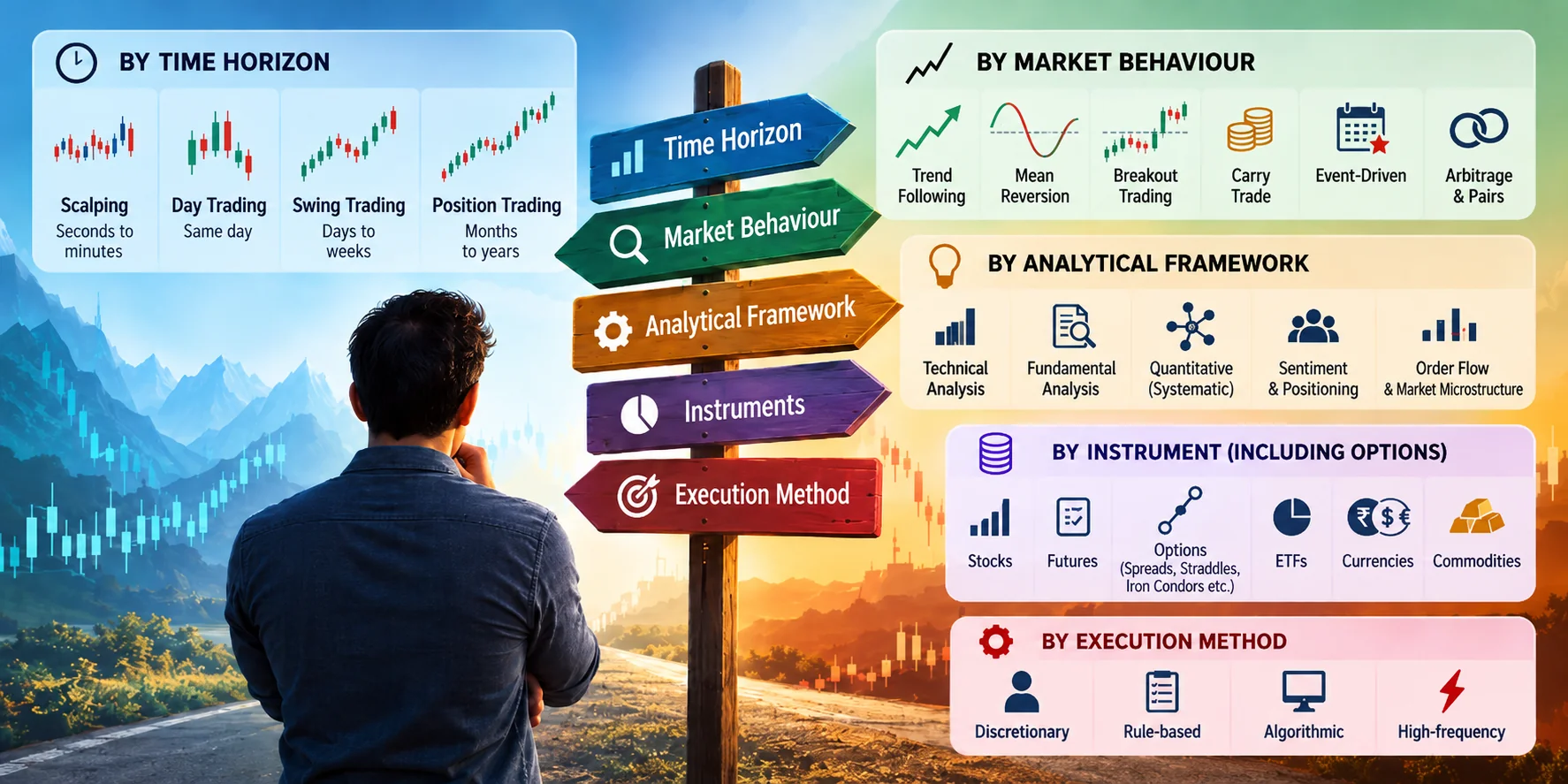
Trading Strategies: Types, Methods and Risk
How trading strategies are classified by time horizon, market behaviour, analytical method, instrument and execution, and where each family's risks lie.
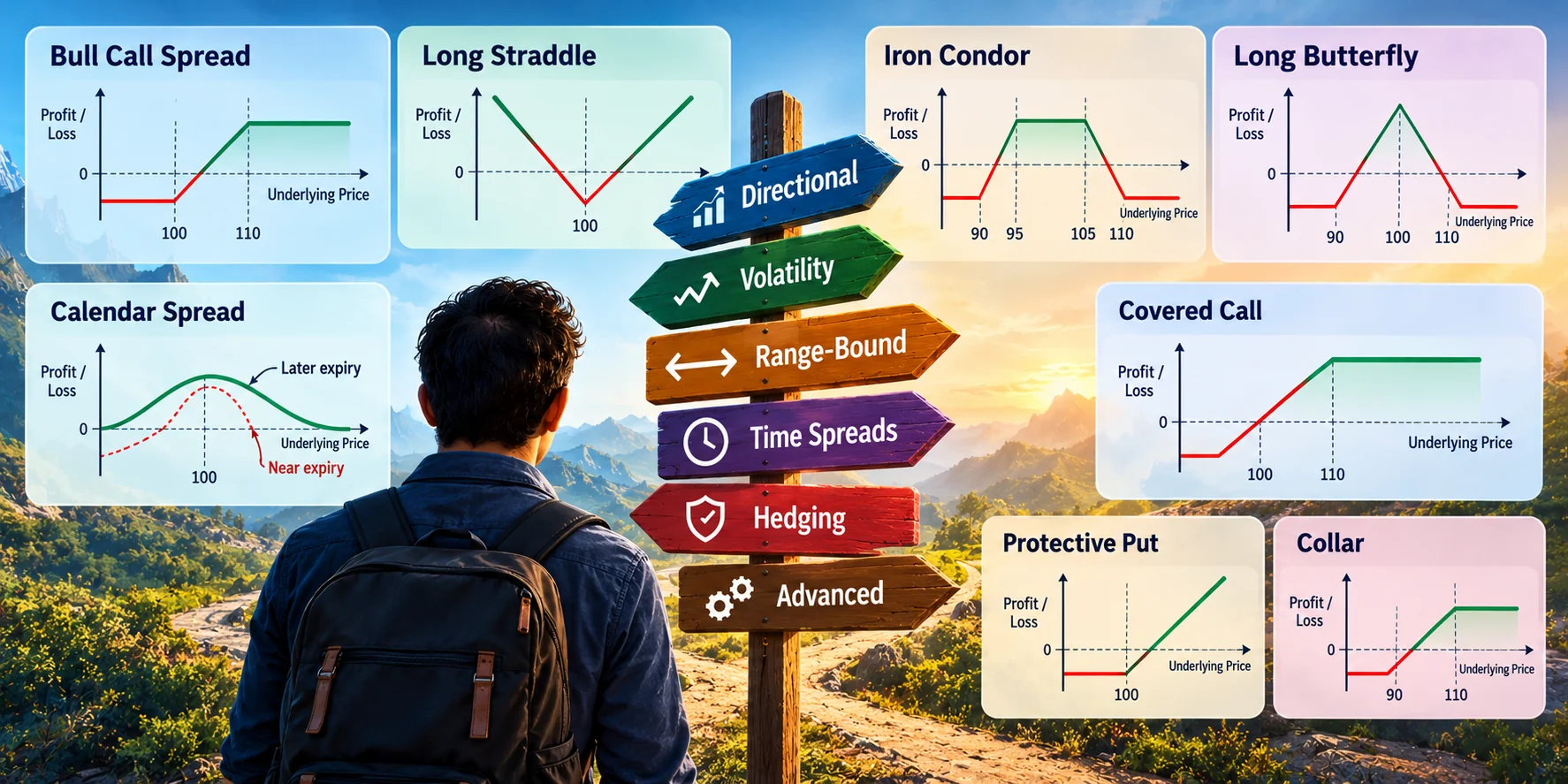
Option Strategies: Payoffs, Construction and Risk
How option legs combine into spreads, straddles, condors, calendars and covered positions: exact construction, expiry payoffs, portfolio Greeks and execution risk.
Automation
The bright, dark & the grey

The Inevitable Crash
Automation makes a strategy consistent, until something breaks. The failure points to plan for: your own machine, your broker, the exchange, code bugs, liquidity and margin.

The World of HFTs
High frequency trading, colocation and tick-by-tick data feed, and what a retail trader is really up against on an exchange floor.

Pine Script & Dhan
How to code a strategy in TradingView's Pine Script and automate its execution through Dhan, from the webinar we ran with the broker.
Psychology
Master the mind to tame the market

Detached Attachment Brings Trading Success
Two steps to trading success: attach to a tested plan, detach from the outcome. Why objective persistence beats subjective discretion.

It's a Business, Treat It Like One
Treat trading like the business it is. What is realistic to expect, and the features that make trading unlike most other businesses.

Persistence Pays Off
Why persistence, not novelty, pays in trading: find a strategy with acceptable trade-offs, then give it enough time to work for you.
Experiences
Our hits & misses so that you miss less and hit more

A Trader's Diary
A first-hand account of the calls that turned an ordinary investor into a systematic trader, from penny stocks to a 15-minute daily routine.

Successful Traders Are Made
Trading skill has little to do with genes. What matters is a workable plan you can follow, and the evidence that it can be taught.

Tips & Tip Providers
How tip services work against you: late entries, inflated performance claims and fake registration numbers, and how to check a provider.

Twitter Traders, YouTube Traders & Real Traders
Social media is full of trading gurus. Six questions to ask before paying for a tip, a course or a strategy, and why proof of work matters.
Scams
Know the traps before you fall for them