A Trader's Diary
A first-hand account of the calls that turned an ordinary investor into a systematic trader, from penny stocks to a 15-minute daily routine.
An ordinary man on the street, with an engineering degree, a regular MNC job and no pedigree or godfather, decides to dabble in the market. The goal, of course, was to make a little more money to supplement the salary. A near-zero brokerage from Reliance Money, paired with a zero-balance ICICI account, sounded like a good kick-start.
The first trade was a penny stock, where a few paise were made in profit. The happiness of that auspicious, profitable start withered when the contract note arrived: it showed a net debit, because the transaction cost submerged the minuscule profit. The first lesson from the market was that brokerage is not the only thing paid when a trade is placed.
From there it was an engaging learning experience, with several experiments, observations and calibrations across many strategies and platforms. Figuring out the market to the point where profit could be made took time and effort, all of it aimed at something profitable yet simple and consistently followable, with an acceptable trade-off between risk, accuracy and profitability. This story belongs to our founder-director, and the key decisions along the way are chronicled below.
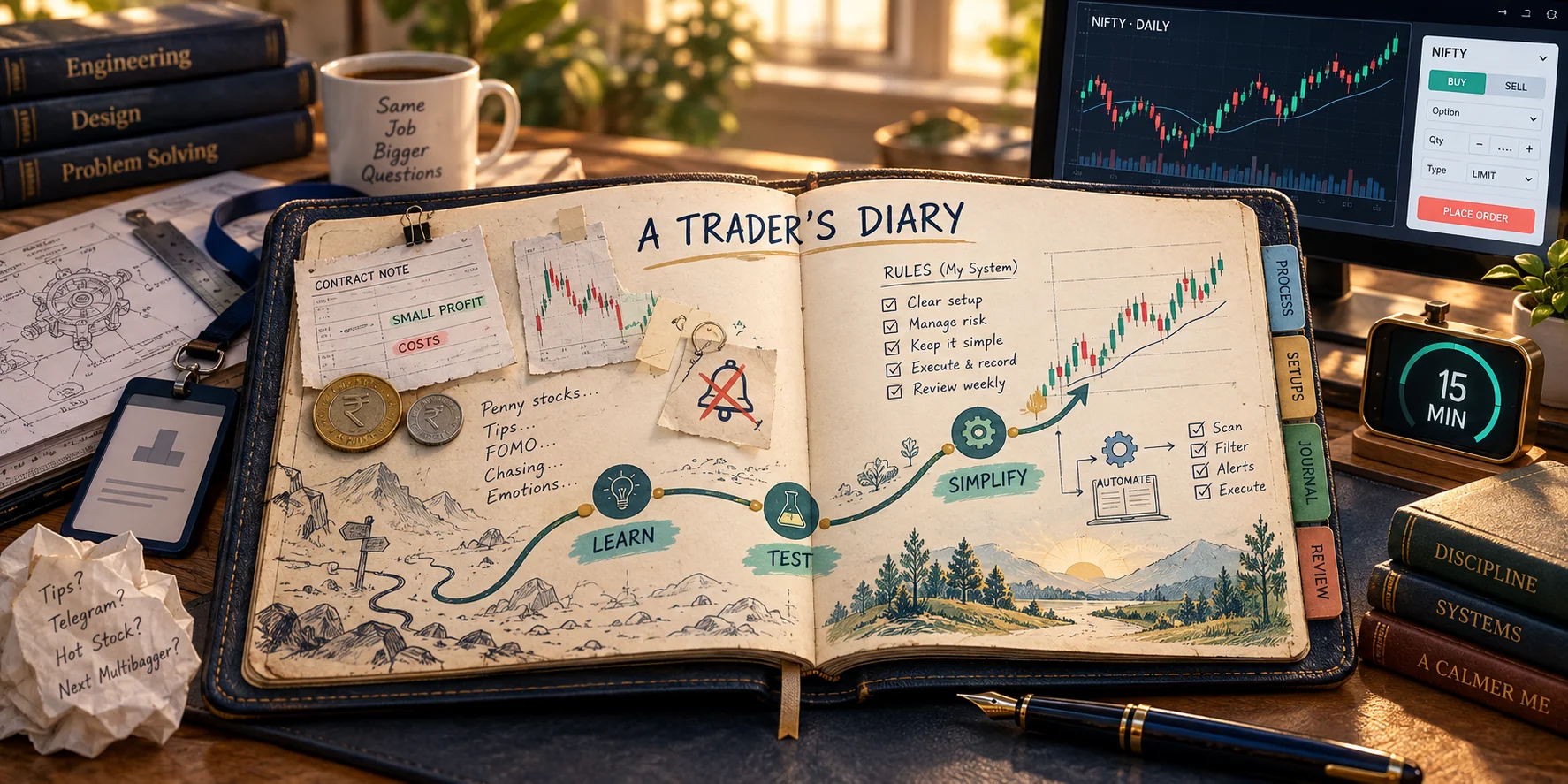
Decisions along the way
- Flushed the fundamentals down the drain. Too much time went into making a decision, every single time, and there was still no guarantee it was the right one.
- Divested investment thoughts. Investments make money only when the market goes up. In trading, money can be made whether the market moves up or down, and even when it is flat.
- Ignored news-based trading. The reaction was always late. Someone knew before a trade based on the news was placed on the platform, so a chance to profit with acceptable risk did not really exist.
- Blocked tipsters. They sent calls after they were already in the position, and exited before their customers were alerted. Their website showed profit while customers booked losses.
- Divorced discretionary trading. Not objective enough to be convincing.
- Said no to stock trading. Difficult to backtest, with data-adjustment issues around splits and bonuses, liquidity issues and circuit freezes, and always someone with more inside information.
- Forced a stop to market watching and then dated auto trading. Chart watching is physically very demanding. Automation helped with seamless execution and exceptional consistency.
- Dumped a profitable 5-minute Nifty trend-following system into the dustbin. Chart data was changing after market close, even though the data feed came from an NSE-authorised vendor.
- Ditched futures and fell in love with options. Better risk management and lower transaction cost in a zero-sum game.
- Zip-locked trading activity from the parents for a while. They got worried and asked, are you not getting a salary as an engineer?
Now it is 15 minutes a day: trend following the Nifty with daily charts, buying naked weekly options, and every market day is a fun day. How about you? Have you figured out your trading plan?